
Public Health





C-123 Airplanes and Agent Orange Residue
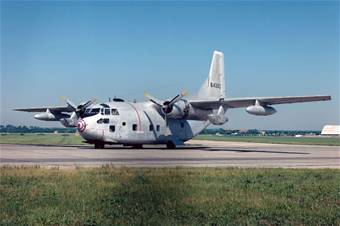
Fairchild C-123K Provider
U.S. Air Force
Air Force Reservists who were crew members on C-123 Provider aircraft, formerly used to spray Agent Orange during the Vietnam War, have raised health concerns about exposure to residual amounts of herbicides on plane surfaces.
Responding to these concerns, VA asked the Health and Medicine Division (HMD) (formally known as the Institute of Medicine) of the National Academy of Sciences, Engineering, and Medicine to study possible exposure and increase in adverse health effects in C-123 crew members.
HMD's scientific report on C-123 contaminated aircraft
HMD released its report, Post-Vietnam Dioxin Exposure in Agent Orange-Contaminated C-123 Aircraft, January 9, 2015. According to the report, from 1972 to 1982, approximately 1,500 to 2,100 Air Force Reserve personnel trained and worked on C-123 aircraft that were previously used to spray herbicides, including Agent Orange, in Vietnam. Those aircraft were used for military airlift, medical transport, and cargo transport operations in the United States and internationally.
HMD found that Reservists who served as flight crew (pilot, navigator, flight engineer, and loadmaster), ground maintenance crew, and aero-medical personnel had regular contact with the aircraft and experienced some exposure to chemicals from herbicide residue. The report determined that it is possible that this exposure contributed to some adverse health effects.
How Reservists may have been exposed
TCDD, the toxic substance in Agent Orange, may be inhaled as an aerosol or ingested by contaminated food or water or from hand-to-mouth transfer.
During the Vietnam War, the U.S. Air Force used C-123 aircraft to spray Agent Orange to clear jungles that provided enemy cover in Vietnam. At the end of the spraying campaign in 1971, the remaining C-123 planes were reassigned to reserve units in the U.S. for routine cargo and medical evacuation missions spanning the next 10 years.
C-123 Airplanes and the Agent Orange Registry
Veterans (including some Reservists) who state that they flew on or worked on a C-123 aircraft between 1969 and 1986 are eligible for the Agent Orange Registry.
Health concerns?
If you have health concerns about Agent Orange, talk to your health care provider or contact your local VA Environmental Health Coordinator to help you get more information from a health care provider.
Not enrolled in the VA health care system? Find out if you qualify for VA health care.
Compensation benefits for health problems
Based on the HMD report, VA has decided to acknowledge exposure to Agent Orange for personnel whose military service involved regular contact with the contaminated C-123 aircraft. This includes individuals who performed service in the Air Force or Air Force Reserve who regularly operated, maintained, or served onboard C-123 aircraft known to have been used to spray herbicides during the Vietnam era.
The following individuals may qualify for benefits related to Agent Orange exposure:
- Active-duty personnel who served in a regular USAF unit location where a contaminated C-123 was assigned who had regular contact with the aircraft through flight, ground, or medical duties between 1969 and 1986, and who developed an Agent Orange related disability.
- Reservists who were assigned to flight, ground, or medical crew duties at the following locations between 1969 and 1986, and who developed an Agent Orange related disability.
- Lockbourne/Rickenbacker Air Force Base in Ohio (906th and 907th Tactical Air Groups or 355th and 356th Tactical Airlift Squadron)
- Westover Air Force Base in Massachusetts (731st Tactical Air Squadron and 74th Aeromedical Evacuation Squadron)
- Pittsburgh, Pennsylvania, International Airport (758th Airlift Squadron)
Veterans may file a claim for disability compensation for health problems they believe are related to exposure to Agent Orange residue on post-Vietnam C-123 airplanes.
Veterans must show on a factual basis that they were exposed in order to receive disability compensation for diseases related to Agent Orange exposure. VA decides these claims on a case-by-case basis. File a claim online.